
Just Between Us
Get Your Marriage On!Communication
4.6307.00 Reviews
- Version
- 2.6.8
- Installs
- 100.00K
- Age Rating
- Teen
Screenshots
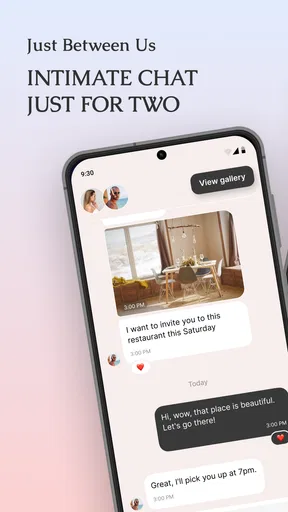
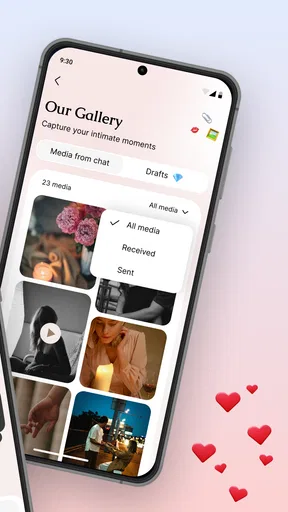
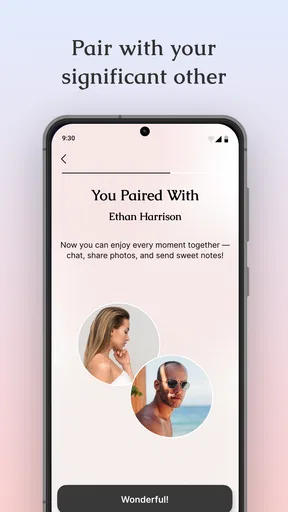
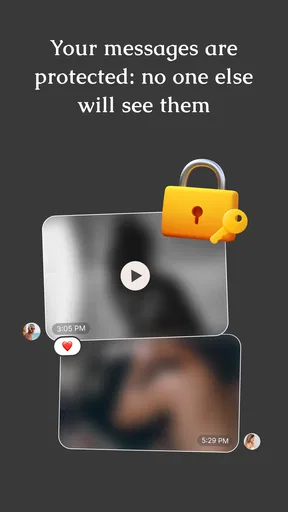
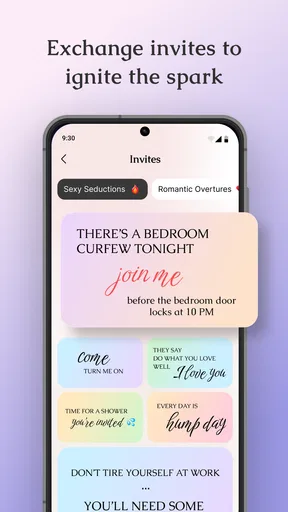

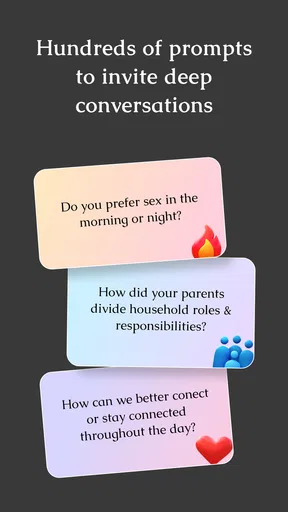
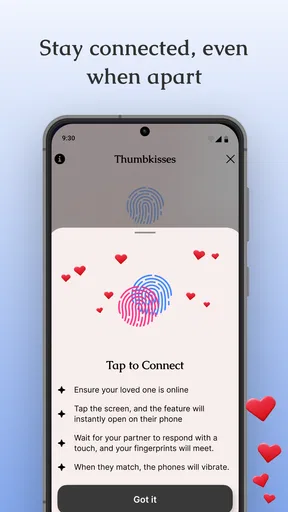
Our Review of Just Between Us
 Analysis by Appyee
When a relationship feels busy rather than broken, finding a calm way to talk can be surprisingly difficult. Just Between Us is a communication app from Get Your Marriage On! built around intimate conversation for couples. I see its main value in giving partners a shared reason to pause, rather than expecting one person to begin a serious discussion from nothing.
The app is free to install and sits in the communication category, with a Teen content rating. It has reached over 100 thousand installs and holds a 4.6 average from around 1.3 thousand ratings, alongside more than 300 written reviews. Those figures suggest that the idea has found an audience, but they do not tell you whether it fits your relationship. In my experience, the important question is whether you want guided couple conversations instead of another general chat tool.
What to expect before you begin
This is not a replacement for ordinary messaging, video calls, or a shared calendar. Its purpose is narrower and, in the right situation, more useful: helping two people turn attention toward each other. The store summary describes it as intimate chat for couples, and that is the best way to set expectations. You are installing a prompt for connection, not a complete relationship-management system.
That distinction matters because many couples already have several ways to communicate. A normal messenger is better for quick logistics, such as deciding who will pick up dinner. A notes app is better for keeping a running list. A video-call service is better when you need facial expressions and a longer conversation. Just Between Us makes more sense when the problem is not access to communication, but the lack of a deliberate opening.
I would especially consider it for partners who live together but keep postponing meaningful conversations, couples who spend time apart, or people who want a private-feeling ritual that is less formal than counseling. It can also help when one partner finds it difficult to say, “We need to talk,” because a shared prompt feels less confrontational.
At the same time, I would not treat it as a solution for serious conflict by itself. An app can make starting easier, but it cannot create honesty, patience, or emotional safety where those are missing. If a conversation involves fear, coercion, abuse, or an urgent mental-health concern, a qualified professional or trusted support service is more appropriate than relying on a couple-chat app.
The developer, Get Your Marriage On!, gives the product a clear relationship focus. That focus is both its strength and its boundary. You are unlikely to get much from it if you want a broad social network, anonymous advice, or a general-purpose messaging client. Its usefulness depends on both partners being willing to participate rather than treating it as something one person can use to repair the relationship alone.
Who will get the most from it
I think the strongest audience is couples who are basically willing to connect but need structure. That includes people who run out of things to say after discussing chores, parents who only have a short window together, and partners who want to discuss feelings without turning every attempt into a formal meeting.
It is also a reasonable choice for someone who prefers small, repeatable actions. A conversation does not need to become a two-hour relationship summit to be worthwhile. A short exchange about appreciation, stress, expectations, or a recent misunderstanding can be more realistic than promising to completely transform communication overnight.
People who should skip it are those looking for extensive customization, a large collection of productivity tools, or a replacement for a therapist. I would also be cautious if your partner has not agreed to use it. Sending prompts repeatedly to someone who experiences them as pressure can make the app counterproductive. The best results come from treating it as an invitation, not an obligation.
From installation to a meaningful first conversation
I’d use this section to set a realistic tone for the first session: the goal is not to uncover everything at once, but to make opening a conversation feel easier for both partners. A useful starting point is to agree on a short time window and a simple pass option, so either person can pause without feeling pressured.
Start with a low-pressure setup
The current version is 2.6.8 and supports devices running Android 7.0 or later. Once installed, I recommend choosing a moment when neither of you is rushing. The first mistake would be opening it during an argument and expecting the app to settle the disagreement. A better approach is to introduce it when things are neutral: after dinner, during a quiet commute if one person is not driving, or before bed when both partners have agreed they have a few minutes.
Keep the first goal modest. You do not need to answer every prompt deeply, explain the entire history of your relationship, or produce a perfect response. Decide together that you will try one conversation and stop if either person becomes overwhelmed. That simple agreement removes a lot of pressure and makes the first use feel collaborative.
Because this is a communication app rather than a public social platform, the value is in what the two of you do with the exchange. I would avoid treating the opening screen like a test. Read the wording carefully, notice what it brings up, and allow each person to answer in their own style. One partner may write several sentences while the other prefers a brief response followed by a spoken discussion. Neither approach has to be forced into the same shape.
The app is free, but it includes optional in-app purchases priced from $4.99 to $49.99 per item. I would begin with the free experience and decide later whether paid material genuinely improves your routine. Do not purchase simply because a prompt makes you feel that your relationship needs a premium solution. The useful test is whether you and your partner are actually returning to the conversations and finding them constructive.
Make the first successful action very small
For a first meaningful success, I would choose one prompt and answer it with a concrete example rather than a vague compliment. Instead of saying, “Everything is fine,” try explaining one moment from the day when you felt supported, overlooked, relaxed, or grateful. Then let your partner respond without immediately correcting the details.
This workflow is more effective than trying to impress each other with polished answers. The app can open the door, but the quality of the exchange depends on listening. A useful pattern is: one person answers, the other reflects back the main point, and then the roles switch. Reflection does not mean agreeing with every interpretation. It simply shows that the answer was heard before the conversation moves toward advice or defense.
A realistic example would be a couple who normally spends the evening dividing chores and checking messages. They open Just Between Us after the children are asleep and choose one question. One partner explains that the hardest part of the day was feeling alone while handling an unexpected task. The other does not jump straight to a solution, but acknowledges the feeling and asks what support would have helped. The conversation may last only a few minutes, yet it produces a specific change for tomorrow. That is a successful first use.
Another practical tip is to separate emotional answers from problem-solving. If a prompt leads to a complaint, ask whether the speaker wants empathy, brainstorming, or simply to be heard. This prevents a common failure: one person shares a feeling while the other responds as though they have been assigned a task. The app cannot make that distinction for you, but its focused format gives you a natural place to practice it.
Handle awkwardness instead of hiding it
The first conversation may feel artificial. That is normal, especially if you and your partner are not used to answering personal prompts together. I would say that openly: “This feels a little unusual, but I want to try it.” Naming the awkwardness often makes it less powerful than pretending the experience should feel effortless.
You can also use a simple pass rule. Either person should be able to say that a question is not right for that moment, then explain whether they would prefer a different prompt, a shorter answer, or a later conversation. This is an important trade-off. More openness is not always better if it arrives without consent or timing.
Do not judge the app by one quiet session. Some prompts will land at exactly the right time, while others may feel too general, too personal, or simply irrelevant to what is happening that day. The useful habit is learning how to select and discuss what fits, not forcing every question to produce a dramatic breakthrough.
Common confusion about what the app can do
The biggest misunderstanding is expecting it to generate closeness automatically. A prompt is only a starting point. If one partner gives short answers while watching television and the other is hoping for a serious exchange, the problem is not necessarily the wording. It may be the timing and level of attention. Put the phones aside if possible, agree on a short window, and make the conversation the activity rather than background noise.
Another point of confusion is assuming that an intimate conversation must end with agreement. It does not. A productive exchange can reveal that you remember an event differently or want different kinds of support. The immediate goal can simply be understanding. Pushing for a resolution every time may turn a gentle conversation into a negotiation.
Some users may also wonder whether a couple-chat app is redundant when they already use a messenger. In my view, the difference is intentionality. A messenger waits for you to supply the subject. Just Between Us is valuable when you need help creating the subject. If you and your partner already have an easy habit of discussing feelings, the app may add little. If you mostly exchange logistics, its focused purpose is more relevant.
There is a further trade-off around paid content. The free starting point lowers the barrier to trying it, while the optional purchases give the product a way to offer more material. I would not assume that buying more automatically means having better conversations. First establish whether the routine works with the material you already have access to. A small, consistent habit is more valuable than a large collection that neither of you opens.
The Teen rating is another reason to use sensible judgment about context. The app is aimed at couple communication and intimate discussion, so users should consider maturity, personal boundaries, and whether the conversation is appropriate for their situation. Adults may find the subject matter comfortable, while younger users should not interpret an app like this as a substitute for trusted guidance when a relationship issue feels unsafe or overwhelming.
Turn one good exchange into a sustainable habit
After the first conversation, resist the urge to schedule an ambitious daily program unless both of you genuinely want that. A better next step is to choose a repeatable moment that already exists in your routine. For example, you might use it during a weekly walk, on a quiet weekend morning, or after completing the evening chores. The exact schedule matters less than making the invitation predictable and easy to decline without punishment.
Keep a mental note of which kinds of prompts lead to useful conversations. You may discover that one partner responds best to questions about recent experiences, while the other opens up more when discussing future plans or appreciation. That is a non-obvious advantage of repeated use: the app can become a way to learn how your partner communicates, not merely a source of questions.
Another useful workflow is to finish with one practical takeaway. It could be a promise to check in after a stressful appointment, a decision to protect uninterrupted time together, or a reminder to express appreciation during the week. Keep it specific and realistic. “Communicate better” is too broad to guide behavior; “ask before offering advice” is something you can actually try.
If a conversation becomes tense, stop while you can still be respectful. Write down the topic you want to revisit, take a break, and return only when both people are ready. The app should support connection, not become evidence in an argument. Quoting a partner’s earlier answer to win a disagreement would undermine the trust that makes intimate communication possible.
For couples who want a more comprehensive alternative, professional counseling offers assessment, context, and support that an app cannot provide. For couples who only need fast coordination, a standard messenger or shared notes tool will be simpler. For couples who want a structured nudge toward personal conversation, this app occupies a useful middle ground: more intentional than ordinary chat, but less demanding than formal therapy.
My recommendation after using it
I like Just Between Us because it understands a practical problem: couples often do not lack feelings; they lack a convenient way to begin talking about them. Its focused communication design makes it easier to propose a conversation without making the moment sound like a crisis. That is a real strength for partners who care about each other but keep postponing meaningful exchanges.
Its limitations are just as important. The experience depends heavily on willingness, timing, and the quality of listening between two people. It will not repair repeated dishonesty, resolve unsafe behavior, or replace skilled help. Some prompts may not suit every couple, and the optional purchases mean that users should evaluate the free starting experience before spending money.
For a first-time user, my advice is simple: install it, agree on a short and pressure-free trial, choose one conversation when you are both reasonably calm, and measure success by whether you understood each other a little better. If that first exchange feels useful, return to it as a small relationship ritual rather than a compulsory assignment. If it feels forced or creates tension, a different format—or a conversation with a qualified professional—may be the better choice.
Overall, I would recommend it to couples who want a gentle prompt to move beyond logistics and reconnect. I would not recommend it as a universal answer, but I do think its narrow purpose is worthwhile. When both partners treat the app as an invitation to be present, the first meaningful success is not completing a prompt; it is making room for an honest conversation.
Verdict
Strengths of Just Between Us
- Private space for sharing photos, messages, and moments with one person.
- Simple interface that is easy to understand and use.
- Helps keep personal conversations separate from other social networks.
- Useful for couples, close friends, or family members.
- Notifications make it easy to stay updated on new shared content.
Limitations of Just Between Us
- Its usefulness depends on the other person actively using the app.
- Limited appeal if you only need occasional private messaging.
- Some features may require account creation or personal information.
- A small user base can make finding contacts or support more difficult.
- Privacy still depends on device security and the app’s current policies.
Similar Picks in This Category
View All
Google Messages
Google LLC4.6

Gmail
Google LLC4.1

Google Meet
Google LLC4.4

Google Chrome
Google LLC4.1

WhatsApp Messenger
WhatsApp LLC4.6

Carrier Services
Google LLC4.2
Frequently Asked Questions
What is Just Between Us, and what is the app used for?
Just Between Us is a private communication app designed for sharing messages, photos, videos, and personal moments with selected people rather than a broad social-media audience. Its main appeal is a more intimate environment for couples, close friends, or family members. Before downloading, users should review the current app description and supported features, since availability and functionality may vary between Android and iOS versions.
Is Just Between Us free to download and use?
The app may be available to download at no initial cost, but users should check the store listing carefully for in-app purchases, subscriptions, advertising, or premium features. Some communication apps offer basic tools for free while placing advanced options behind a paid plan. Pricing, trial periods, and cancellation terms can change, so confirm the details in Google Play or the App Store before creating an account or entering payment information.
How private and secure are conversations on Just Between Us?
Just Between Us is intended for more personal communication, but users should not automatically assume that every message is protected by end-to-end encryption or that content can never be accessed. Review the app’s privacy policy, permissions, account settings, and information about data collection before using it. Avoid sharing passwords, financial details, identity documents, or other highly sensitive information unless the developer clearly explains how that data is protected.
What permissions and device requirements does Just Between Us need?
Depending on the features you use, Just Between Us may request access to notifications, contacts, the camera, microphone, photos, or device storage. These permissions can support messaging and media sharing, but you can usually review or revoke them through your phone’s settings. Check the app-store listing for the required Android or iOS version, available storage, and whether certain features depend on a newer device or operating system.
Can I use Just Between Us with friends or family on different phones?
Compatibility generally depends on whether the people you want to contact can install the same app on their devices and create or join the relevant private connection. Before downloading, confirm that Just Between Us supports both your platform and the platforms used by your contacts. Also check whether an account, invitation, phone number, email address, or internet connection is required, as these details can affect how easily you can begin communicating.
